

Key Takeaways
- Most homeowners can relight a standing pilot in a few minutes by following the steps on the fireplace’s label.
- If you smell gas at any point, don’t light anything. Leave the house and call the gas company from outside.
- Wait at least 5 minutes with the knob on OFF before you try to light the pilot.
- A pilot that won’t stay lit after three tries needs a technician.
- Yearly fireplace service helps the pilot light reliably when the first cold front arrives.
Every fall we get calls from Birmingham homeowners who flip the switch on their gas fireplace and nothing happens. Very often the only problem is that the pilot light went out over the summer. Knowing how to light a gas fireplace pilot is something most homeowners can do safely in a few minutes, as long as you follow the steps and know when to stop.
Not sure the problem is the pilot at all? Our gas fireplace service team can take a look whenever you’d rather not do it yourself.
How do you light a gas fireplace pilot light?
Turn the control knob to OFF and wait 5 minutes. Then set it to PILOT, hold it in, and press the igniter until the pilot flame appears. Keep holding for 30 to 60 seconds, release slowly, and turn the knob to ON. Your manufacturer’s instructions always come first.
Start by finding your fireplace’s instructions. Most gas fireplaces and gas log sets have a lighting label on the inside of the lower access panel or on the back of the control valve cover. The steps below are typical, but follow your label if it differs.
Before you start: if you smell gas, do not try to light anything. Leave the house and call the gas company from outside.
Typical steps to relight a standing pilot:
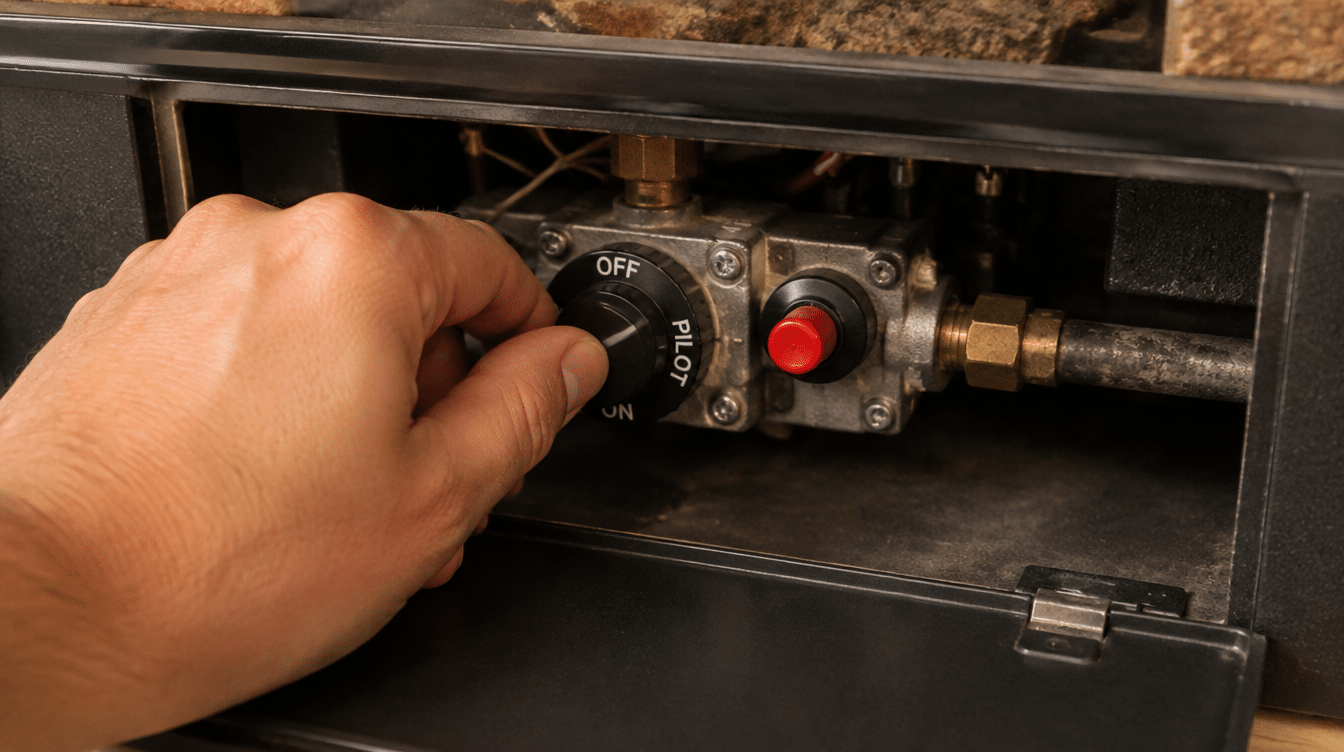
- Remove the lower access panel to reach the control valve. You’ll usually see a knob marked OFF, PILOT and ON, and a red or black igniter button.
- Turn the knob to OFF and wait at least 5 minutes so any gas that has built up can clear.
- Turn the knob to PILOT. Push the knob in and hold it down. This lets gas flow to the pilot.
- While holding the knob in, press the igniter button repeatedly until you see the pilot flame through the glass or at the pilot assembly.
- Keep holding the knob in for about 30 to 60 seconds after the pilot lights. This lets the thermocouple or thermopile heat up so the pilot stays on by itself.
- Slowly release the knob. If the pilot stays lit, turn the knob to ON. Then use your wall switch or remote to turn on the main burner.
What if your fireplace has electronic ignition?
If your fireplace has electronic ignition and no standing pilot, you won’t use the knob steps above. Check the remote and receiver batteries and the wall switch first. If it still won’t start, call a technician rather than trying to force it.
Electronic systems light the burner on demand, so a dead battery is a common reason nothing happens. It’s a quick check and often solves the problem.
When should you stop and call a pro?
Stop and call a professional if the pilot won’t stay lit, the igniter clicks without lighting it, the flame looks wrong, or you’ve tried three times. And if you smell gas at any point, leave the house right away. These are signs of a part that needs testing or replacing.
- The pilot lights but goes out as soon as you let go of the knob. This is often a worn thermocouple or thermopile.
- The igniter clicks but never lights the pilot.
- The pilot flame is weak, yellow, or lifting off the pilot assembly.
- You’ve tried three times and it won’t stay lit.
- You smell gas at any point.
Why does a gas fireplace pilot light go out?
A pilot usually goes out because it was turned off for summer, something is blocking the pilot tube, or a part has worn out. Dust, spider webs and insects can clog the tube while the fireplace sits unused, and thermocouples wear out over time.
Some homeowners turn the pilot off for summer to save gas, which means it has to be relit each fall.
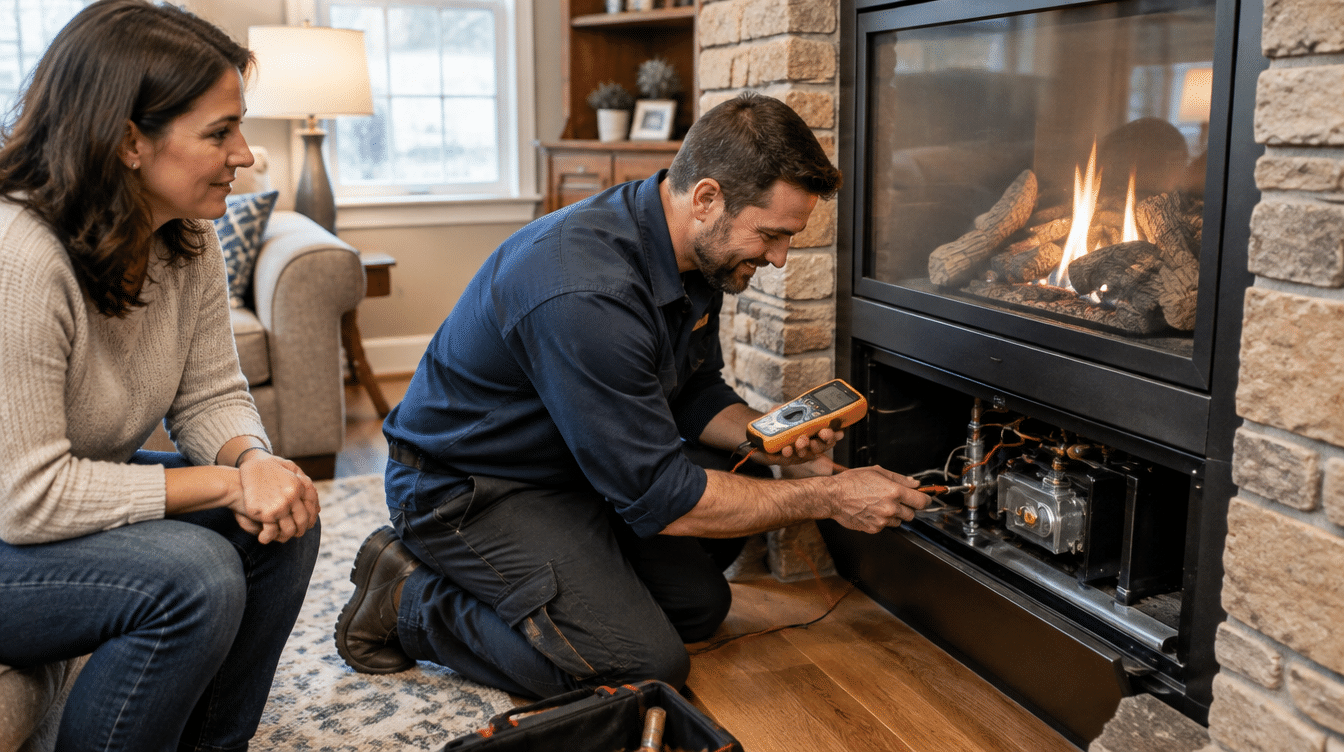
Yearly service helps. During a fireplace service visit, a Douglas technician cleans the pilot assembly and burner, tests the thermocouple or thermopile and safety controls, and checks the gas connections for leaks, so the fireplace lights reliably when the first cold front hits. DouglasCare maintenance members can add fireplace service to their plan.
Frequently Asked Questions
How long should I wait before relighting a pilot?
Wait at least 5 minutes with the knob turned to OFF. That gives any gas that has built up time to clear before you try again.
Where are the lighting instructions for my fireplace?
Most gas fireplaces and gas log sets have a label inside the lower access panel or on the back of the control valve cover. Your manufacturer’s instructions always come first.
How long do I hold the knob in after the pilot lights?
Hold it for about 30 to 60 seconds. This lets the thermocouple or thermopile heat up so the pilot stays on by itself.
Why does my pilot go out when I release the knob?
This is often a worn thermocouple or thermopile. It’s a good time to stop and call a technician.
What should I do if I smell gas?
Don’t try to light anything. Leave the house and call the gas company from outside.
How many times should I try to light the pilot?
If it won’t stay lit after three tries, stop and call a pro. Repeated attempts won’t fix a worn or blocked part.
Can dust or insects keep the pilot from lighting?
Yes. Dust, spider webs and insects can block the pilot tube while the fireplace sits unused.
Do you service gas fireplaces near me?
We install and service gas fireplaces and gas logs across the Birmingham area, including Hoover, Pelham, Helena, Alabaster and Vestavia Hills.
Serving Birmingham Since 1972
Need Help With Your Gas Fireplace?
An honest, in-home evaluation from a NATE-certified technician. We’ll explain your options and help you choose what’s right for your home.