
Key Takeaways
- Check the thermostat first: a fan set to "on" blows room-temperature air between heating cycles.
- A clogged air filter can overheat the furnace and trip a safety switch, leaving the blower running with no heat.
- Pilot, igniter and flame sensor problems are best left to a technician.
- If you smell gas, get everyone outside and call your gas company or 911 from outside.
- A yearly tune-up before cold weather catches many of these problems early.
If your furnace is blowing cold air, the cause is usually one of a handful of things. The thermostat may be set to "fan on" instead of "auto," the furnace may not have finished warming up, the filter may be clogged, the burners may not be lighting, or a safety switch may have shut them off.
Some of these you can check yourself in five minutes. Others need a technician. Here’s how to tell the difference, and when it’s time to call for heating service in Birmingham.
Why is my furnace blowing cold air?
Most of the time, a furnace blowing cold air comes down to a thermostat set to "fan on," a furnace that hasn’t finished warming up, or a clogged air filter. All three are quick to check yourself. Start there before you assume something is broken.
Thermostat. It sounds too simple, but it’s the first thing we check on a lot of no-heat calls around Birmingham. Make sure the system is set to "heat" and the temperature is a few degrees above the room temperature. If the fan setting says "on," the blower runs all the time, even when the burners are off, so you’ll feel cool air between heating cycles. Switch it to "auto." If your thermostat runs on batteries and the screen is blank or dim, swap them first.
Warm-up time. A gas furnace doesn’t push out hot air the second it turns on. The burners light, the heat exchanger warms up, and then the blower starts. The first air out can feel cool because it was sitting in cold ductwork. If it warms up after a couple of minutes, that’s normal.
Air filter. A clogged filter keeps enough air from moving across the heat exchanger. The furnace can overheat, and a safety switch called the high limit switch shuts the burners off to protect the system. The blower keeps running to cool things down, so you get cold air from the vents.
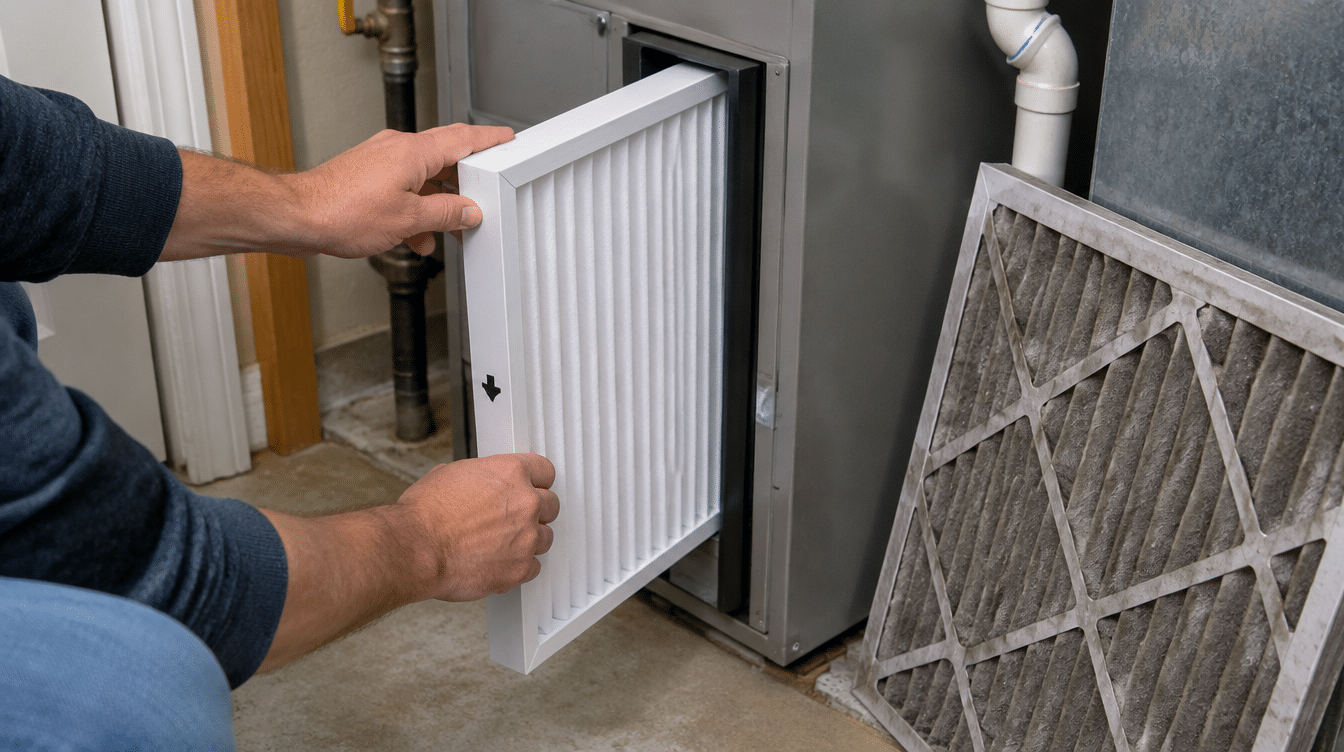
Pull the filter and hold it up to a light. If you can’t see light through it, replace it, with the arrow on the frame pointing toward the furnace. If the furnace keeps shutting off even with a clean filter, call a technician, because repeated overheating can point to a bigger airflow or burner problem.
Pilot light, igniter and flame sensor problems
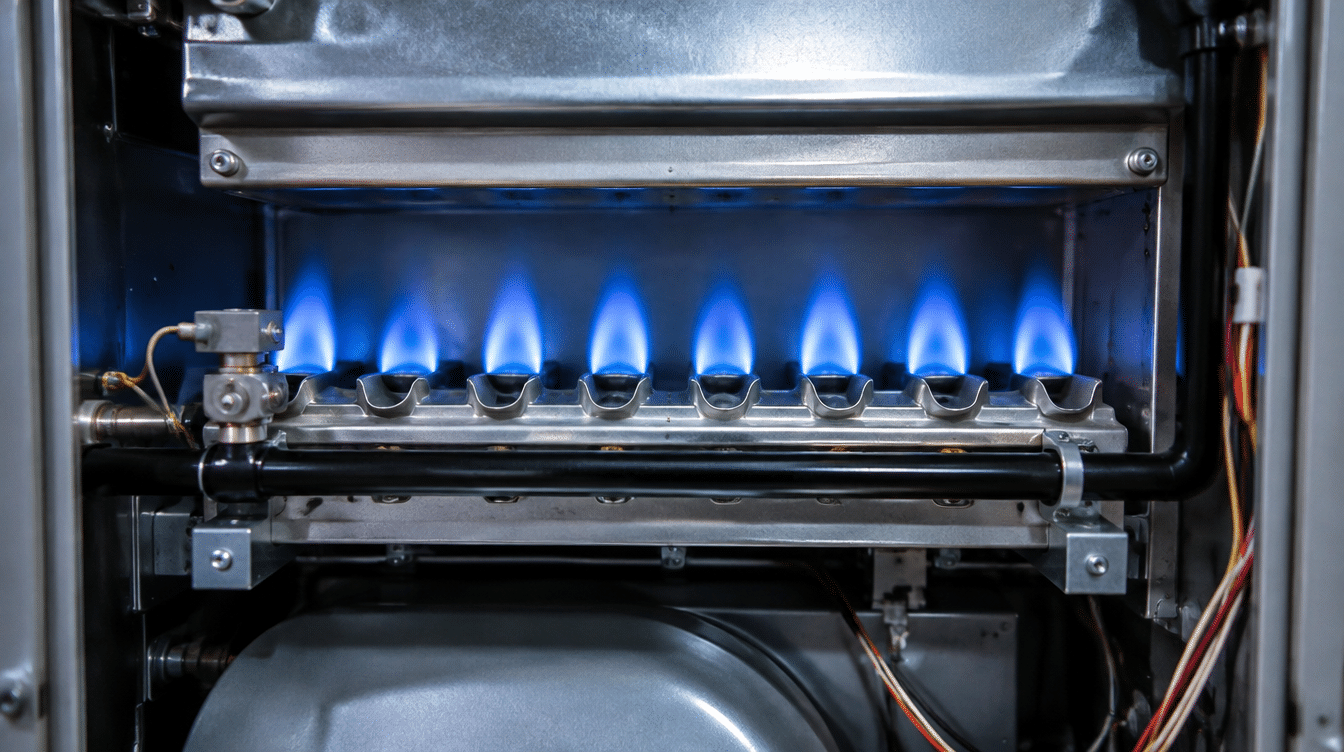
If the burners never light or shut off after a few seconds, the blower keeps running and pushes out cool air. The usual suspects are a pilot light that’s out, a worn electronic igniter, or a flame sensor coated with residue. Most of these repairs are best left to a technician.
Older furnaces use a standing pilot light, and newer ones use an electronic igniter. If the pilot is out or the igniter is worn out, the burners never light, but the blower may still run. On an older furnace, the relighting instructions are usually printed on a label inside the access panel. Follow those exactly. If the pilot won’t light, won’t stay lit, or keeps going out, stop there and call a pro. That often means a bad thermocouple, a dirty pilot assembly or a gas supply issue. Electronic igniters wear out over time, and replacing one is a quick repair for a technician.
On most modern gas furnaces, a small metal rod called the flame sensor confirms that the burners are lit. If it gets coated with residue, it can’t "see" the flame, so the furnace shuts the gas off after a few seconds as a safety measure. You’ll often hear the furnace start, run very briefly and shut down, over and over, while the blower moves cool air.
Cleaning a flame sensor is a routine part of a furnace tune-up. Because it means working in the burner compartment near the gas valve, we recommend leaving it to a technician.
Could the gas supply or power switch be the problem?
Yes. A closed gas valve, a switched-off furnace power switch, or a gas service problem can all keep the burners from lighting while the fan runs. Checking them takes a minute. If you ever smell gas, though, skip the troubleshooting and get everyone outside.
Make sure the gas valve to the furnace is open, with the handle lined up with the pipe. Also check the furnace’s power switch. It looks like a regular light switch near the unit and is easy to flip off by accident. If your other gas appliances aren’t working either, the problem may be your gas service, so call your gas company.
Gas safety: If you smell gas, which usually smells like rotten eggs, don’t try to troubleshoot anything. Don’t flip light switches, don’t use your phone inside, and don’t try to relight anything. Get everyone out of the house, then call your gas company or 911 from outside.
What else can cause cool air from the vents?
Yes, a few less obvious problems can do it too. A clogged condensate drain on a high-efficiency furnace can trip a float switch, leaky ducts can lose heat before it reaches your rooms, and heat pumps naturally blow cooler air than a gas furnace. Each one has a telltale sign.
Condensate drain. High-efficiency furnaces produce water as they run, and that water drains through a small line and sometimes a pump. If the line clogs or the pump fails, a float switch shuts the furnace down to prevent water damage. Water around the furnace is a good clue. A technician can clear the line and check the pump.
Ductwork. If the furnace is putting out heat but some rooms still get cool air, look at the ducts. A duct that came loose in the attic or crawl space can dump warm air where it does no good, and it can go unnoticed for a long time. A technician can inspect the ducts and reconnect or reseal them.
Heat pumps. Many Birmingham homes heat with a heat pump, or have one with a gas furnace as backup. Heat pump air often feels cooler than furnace air even when it’s working properly. Heat pumps also run a defrost cycle on cold, damp days, so you may feel cooler air for a few minutes. If yours blows cool air for long stretches and the house won’t warm up, have it checked.
When should I call a professional?
Call a technician if your furnace still blows cold air after you’ve checked the thermostat, filter, power switch and gas valve, or if the burners keep lighting and shutting off. Don’t wait on warning signs like water, strange noises or a CO alarm.
Call a technician if:
- The furnace still blows cold air after you’ve checked the thermostat, filter, power switch and gas valve
- The burners light and then shut off within seconds, over and over
- The pilot won’t light or won’t stay lit
- You hear unusual banging, screeching or rattling
- You see water around the furnace
- Your carbon monoxide alarm sounds, or anyone in the house has headaches, dizziness or nausea that improve when they leave home
If your CO alarm goes off, get everyone outside to fresh air right away and call 911. Don’t go back in until it’s been checked.
Most of these problems show up in fall, the first time the heat runs after a long summer. A yearly furnace tune-up before cold weather catches many of them early: dirty flame sensors, worn igniters, clogged condensate lines and loose wiring. It’s also a chance to check the heat exchanger and venting so combustion gases go outside where they belong.
Our DouglasCare maintenance plan is an easy way to keep that yearly visit on the calendar, so you don’t have to remember to schedule it.
Frequently Asked Questions
Why is my furnace blowing cold air instead of hot?
The most common reasons are a thermostat fan set to "on," a clogged filter, a furnace that’s still warming up, or burners that aren’t lighting. Check the thermostat and filter first. If those are fine, call a technician.
Is it normal for a furnace to blow cold air at startup?
Yes, briefly. The burners light and the heat exchanger warms up before the blower starts, and the first air out can feel cool from sitting in cold ductwork. If it doesn’t warm up after a couple of minutes, something else is going on.
Can a dirty air filter make my furnace blow cold air?
It can. A clogged filter restricts airflow, the furnace overheats, and the high limit switch shuts the burners off. The blower keeps running to cool things down, so the vents blow cold air.
Should the thermostat fan be on "auto" or "on"?
For most homes, "auto" is the right setting for heating. The fan then runs only when the furnace is actually heating. With "on," you’ll feel cool air from the vents between heating cycles.
Why does my furnace start, run briefly and shut off?
A dirty flame sensor is a common cause. It can’t confirm the flame, so the furnace shuts the gas off after a few seconds as a safety measure. Cleaning it is a routine tune-up task, and we recommend leaving it to a technician.
Can I relight my furnace pilot light myself?
On an older furnace, the relighting instructions are usually printed on a label inside the access panel, and you can follow them exactly. If the pilot won’t light or keeps going out, stop and call a pro. And if you smell gas, don’t try to relight anything.
Why does my heat pump blow cool air in winter?
Heat pump air often feels cooler than furnace air even when it’s working properly. They also run a defrost cycle on cold, damp days, which can bring a few minutes of cooler air. If it blows cool for long stretches and the house won’t warm up, have it checked.
What should I do if I smell gas near my furnace?
Don’t flip light switches, don’t use your phone inside, and don’t try to relight anything. Get everyone out of the house, then call your gas company or 911 from outside.
Serving Birmingham Since 1972
Furnace blowing cold air? Let us take a look
An honest, in-home evaluation from a NATE-certified technician. We’ll explain your options and help you choose what’s right for your home.