
Key Takeaways
- When a CO alarm sounds its full alarm pattern, get everyone and the pets outside, then call 911 from outside.
- Don’t stop to open windows, hunt for the source or shut off appliances before you leave.
- A single short chirp usually means a low battery or an expired unit, but if you can’t tell, treat it as real.
- Don’t restart your furnace, water heater or gas fireplace until a professional has inspected it.
- A yearly heating inspection is the best way to prevent carbon monoxide problems.
If your carbon monoxide alarm goes off with its full, loud alarm pattern, get everyone in the house (pets too) outside into fresh air right away, then call 911 from outside. Don’t stop to open windows, hunt for the source, or turn appliances off. The U.S. Consumer Product Safety Commission says it plainly: “If you suspect CO poisoning, get outside to fresh air immediately, and then call 911.” (CPSC)
Below is what to do next, how to tell a real alarm from a chirp, and what a technician checks before it’s safe to turn things back on.
If the fire department finds a problem with your heating equipment, our heating team can help you get it fixed safely.
Why shouldn’t you wait it out when a CO alarm sounds?
Because carbon monoxide (CO) has no color and no smell, you can’t tell it’s there, and the early symptoms are easy to blame on something else. When the alarm sounds, assume it’s real. A false alarm costs you a few minutes in the yard, while ignoring a real one can cost far more.
The CDC lists headache, dizziness, weakness, upset stomach, vomiting, chest pain and confusion as symptoms, which a lot of people mistake for the flu. The CDC also reports that each year more than 400 Americans die from unintentional CO poisoning not linked to fires, more than 100,000 visit an emergency department, and more than 14,000 are hospitalized. (CDC)

What should you do step by step when the CO alarm goes off?
Get everyone outside, call 911 from outside, get medical help for anyone with symptoms, and stay out until responders say it’s safe. Don’t restart any fuel-burning equipment until it’s been inspected. Here’s the full list.
- Get everyone out. Wake anyone who’s sleeping, grab the pets, and go outside. Don’t linger.
- Call 911 from outside. Firefighters carry meters that can measure CO levels in your home. Tell the dispatcher your carbon monoxide alarm is going off and whether anyone feels sick.
- Get medical help for anyone with symptoms. Headache, nausea, dizziness or confusion after being in the house are reasons to tell the dispatcher and get checked out.
- Stay outside until responders tell you it’s safe. Don’t go back in for your phone charger or to shut the furnace off yourself.
- Don’t restart fuel-burning equipment until it’s been inspected. If the fire department finds CO, the source needs to be found and fixed before you run the furnace, water heater, gas fireplace or gas logs again. That’s where a licensed heating and plumbing contractor comes in.
Is it a real alarm or just a chirp?
A true alarm is loud and repeats in a steady pattern. A single short chirp every minute or so usually means the battery is low or the unit has reached the end of its service life. If you can’t tell which sound you’re hearing, treat it as a real alarm and get outside.
Most CO alarms are designed to wear out after several years and will chirp to tell you so. Look at the label on the back of yours. It will show the manufacture date and explain what each sound means for that model.
If your alarm has a hush or silence button, know that it only quiets the noise. It doesn’t clear the air. If CO is still present, the alarm will go off again.
Where does carbon monoxide come from in a home?
Anything that burns fuel can produce carbon monoxide. The CDC’s list of common sources includes furnaces, gas ranges, fireplaces, portable generators, grills, cars and trucks, and small engines. (CDC) Here’s what we see most often around Birmingham:
- A furnace problem. A cracked heat exchanger, a dirty or poorly adjusted burner, or a blocked or disconnected flue pipe can let combustion gases into your living space instead of up and out the vent. Older furnaces that haven’t had a yearly check are the usual suspects.
- A water heater that isn’t venting properly. Gas water heaters need a clear vent and enough air to draft correctly. A loose vent connector or a closet that’s been sealed up too tight can cause trouble.
- Gas fireplaces and gas logs. Vented gas logs need the damper open. A blocked chimney or a fireplace that hasn’t been serviced in years can push exhaust back into the room.
- Cars in an attached garage. Warming up the car on a cold morning with the garage door shut, even for a few minutes, can send CO into the house.
- Portable generators. After a storm knocks out power, generators get used close to the house or even in the garage. The CPSC says more than 200 people in the U.S. die each year from accidental non-fire CO poisoning linked to consumer products, with over 100 of those deaths associated with portable generators, and that one portable generator produces as much CO as hundreds of cars. (CPSC) Run generators outside, far from doors, windows and vents. Never in the garage, even with the door up.
What does a technician check after a CO alarm?
After the fire department clears the house, a technician inspects every fuel-burning appliance to find out why it happened. That means the furnace, water heater and any gas fireplace or gas logs, plus combustion testing with a CO analyzer so the work is based on readings, not guesses.
- The furnace: the heat exchanger, burners and flame, the flue pipe and venting, and whether the system is drafting correctly.
- The water heater: the vent connector, draft and combustion air.
- Gas fireplaces and gas logs: the burner, the venting or chimney, and the damper.
- Combustion testing with a CO analyzer.
ENERGY STAR recommends that a heating tune-up include a check of “all gas (or oil) connections, gas pressure, burner combustion and heat exchanger.” (ENERGY STAR) That’s the same ground we cover after an alarm, and it’s a big part of why yearly maintenance matters.
Where should your CO alarms be, and what’s the best prevention?
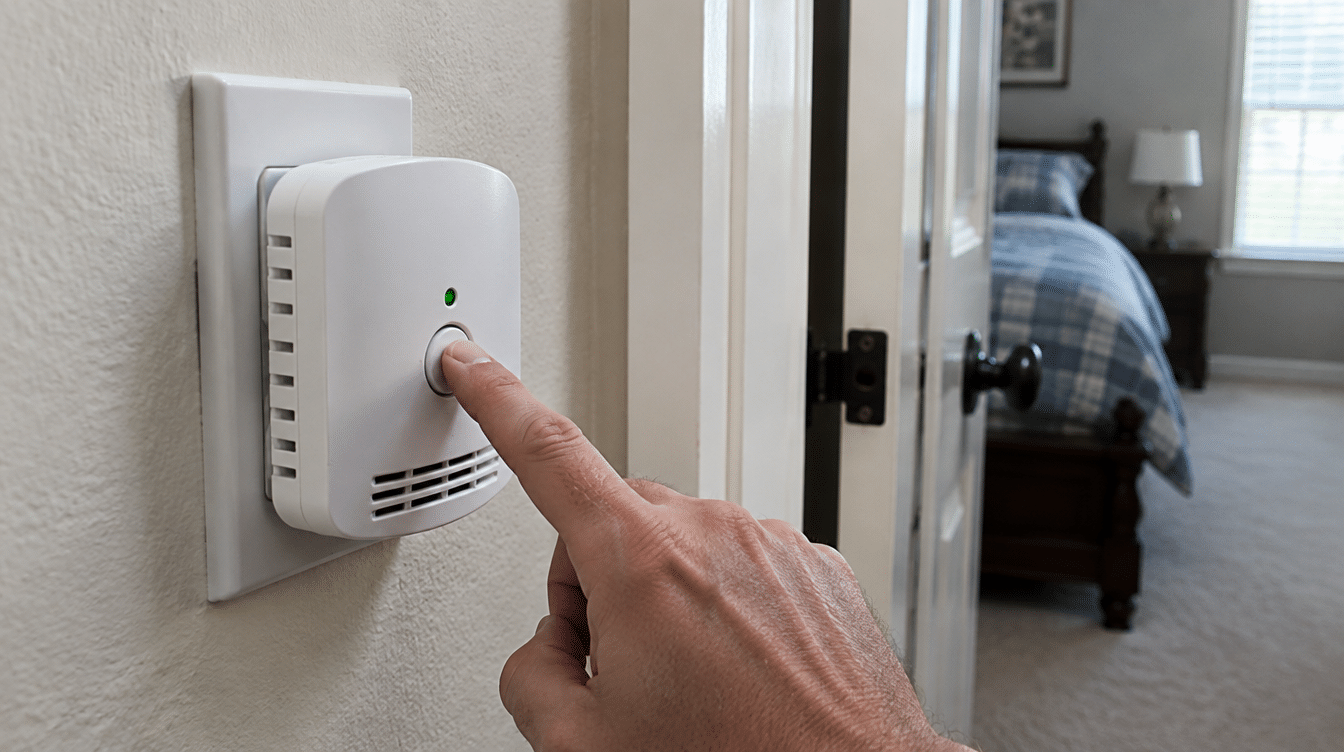
The CPSC recommends CO alarms on every level of the home and outside sleeping areas, and says interconnected alarms are best because when one sounds, they all sound. It also says to check the batteries regularly. (CPSC)
Test your alarms with the test button on the schedule in the manufacturer’s instructions, and replace any unit that’s past the date printed on it.
One more thing: a CO alarm is not a natural gas detector. If you smell a rotten-egg odor, that’s a possible gas leak, which is a different emergency. Don’t flip light switches or use anything that could spark. Leave the house and call your gas company or 911 from outside.
The best fix is prevention. Most carbon monoxide problems we find come from equipment that hasn’t been looked at in a while. A yearly heating inspection catches cracked heat exchangers, blocked vents and bad burners before your alarm ever has a reason to go off. Our DouglasCare maintenance plan keeps that yearly visit on the calendar, and our technicians can also repair or replace a furnace, water heater or gas fireplace that isn’t safe to run.
Frequently Asked Questions
What should I do first if my carbon monoxide alarm goes off?
Get everyone out of the house, pets included, and call 911 from outside. Don’t stop to open windows or turn off appliances. Wake anyone who’s sleeping on your way out.
Should I call 911 even if nobody feels sick?
Yes. Firefighters carry meters that can measure CO levels in your home. Tell the dispatcher your alarm is going off and whether anyone has symptoms.
What are the symptoms of carbon monoxide poisoning?
The CDC lists headache, dizziness, weakness, upset stomach, vomiting, chest pain and confusion. Many people mistake these for the flu. If anyone has them after being in the house, tell the dispatcher and get checked out.
How can I tell a CO alarm from a low battery chirp?
A true alarm is loud and repeats in a steady pattern. A single short chirp every minute or so usually means a low battery or an expired unit. If you can’t tell, treat it as real and get outside.
Does the silence button fix the problem?
No. It only quiets the noise and doesn’t clear the air. If CO is still present, the alarm will sound again.
When can I go back inside?
Stay outside until responders tell you it’s safe. Don’t go back in for belongings or to shut the furnace off yourself.
When can I use my furnace or water heater again?
Not until the equipment has been inspected. If the fire department finds CO, the source needs to be found and fixed before you run the furnace, water heater, gas fireplace or gas logs again.
Where should I put CO alarms in my home?
The CPSC recommends alarms on every level of the home and outside sleeping areas. Interconnected alarms are best because when one sounds, they all sound.
Is a CO alarm the same as a natural gas detector?
No. If you smell a rotten-egg odor, that’s a possible gas leak. Don’t flip light switches or use anything that could spark. Leave the house and call your gas company or 911 from outside.
Serving Birmingham Since 1972
Need Help After a CO Alarm? Call Douglas
An honest, in-home evaluation from a NATE-certified technician. We’ll explain your options and help you choose what’s right for your home.